
If you own a home in California or Arizona, you can probably skip annual garage door maintenance and lose nothing meaningful.
Tell us what the door is doing. Nothing begins until you've heard the number, and hearing it is free.
If you own a home in California or Arizona, you can probably skip annual garage door maintenance and lose nothing meaningful. The dry, mild climate is gentle on every component. PA climate is the opposite - punishing on every part of a garage door system. Freeze-thaw cycles fatigue spring steel. Humidity oxidizes cables and hardware. Salt accelerates corrosion. Thunderstorms send surges through opener boards.
Customers who tune up annually average 18-22 years of door life vs. 12-15 for non-maintained doors.
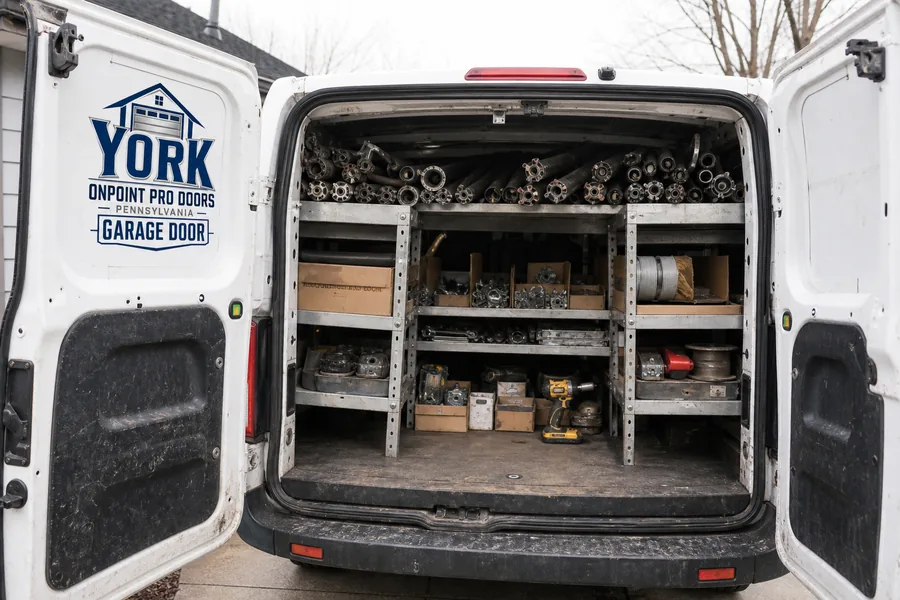
The same six jobs as everywhere else we work, with the parts for the doors common here already on board.
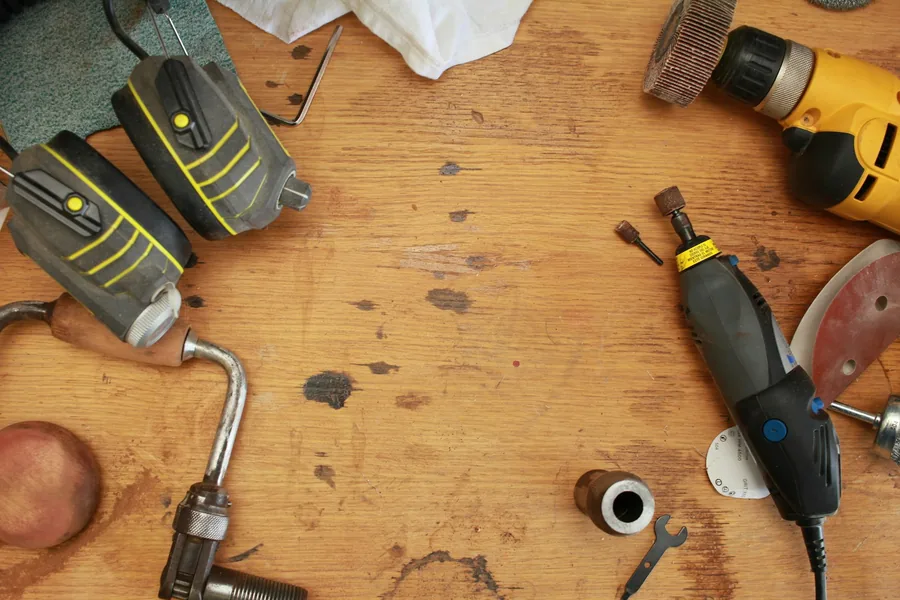
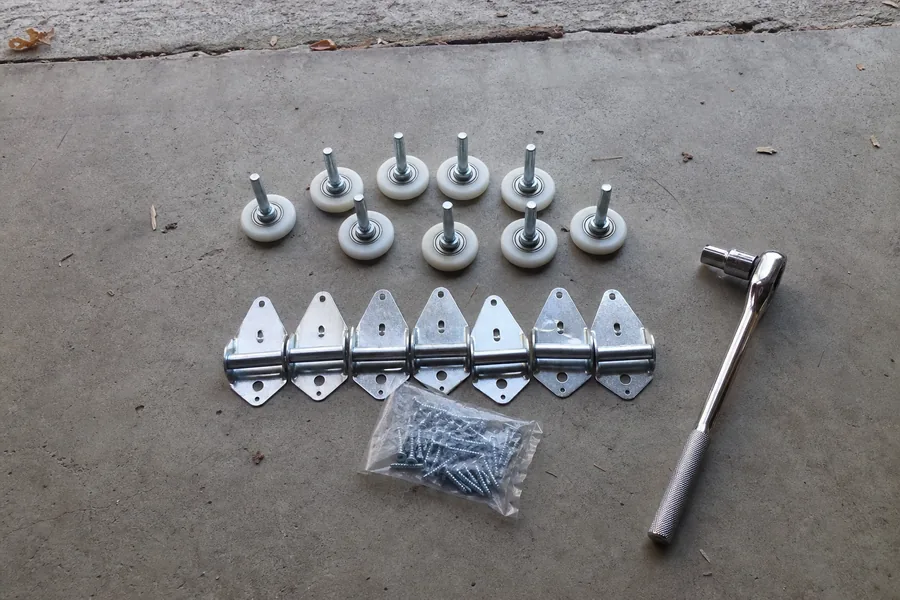
Our checklist is genuinely 20 items, every one of which we perform on every visit. We don't skip steps and we don't upsell. The list.
You can do most of it. The lubrication, hardware tightening, sensor cleaning, and balance test are completely DIY-friendly.
We run tune-up routes through every PA metro on a rotating weekly schedule. Regional notes on what we typically find.
A few representative tune-up findings from recent visits across the state.
Bryn Mawr, Main Line: 2009 LiftMaster on a 2002 builder-grade insulated door. Customer scheduled the tune-up because the door was getting noisy. We found 8 of 10 rollers had cracked nylon caps, the spring was within 6 months of failure (visible coil separation), and the bottom seal had a 1-inch gap letting in mice. Customer accepted; door is now silent and another decade of life secured.
Cranberry Township, Pittsburgh: 2018 Wayne Dalton with insulated panels. Regular yearly tune-ups since install. Door is in like-new condition at year 8. This is the goal.
Lancaster: 1995 LiftMaster on a 1990s wood door. Customer had never tuned in 30 years. Found rotted bottom panel, fatigued cables, stretched chain, dying capacitor, weatherseal completely gone. Customer chose replacement; new install scheduled.
Monthly: Look at and listen to your door during one cycle. Note any new noises, hesitation, or unusual movement. Visual check of cables (look for fraying), springs (look for gaps in coils), rollers (any wobble), and door panels (any new cracks or dents).
Every 3 months: Test the safety reverse. Place a 2x4 flat on the floor in the door's path. Trigger the close cycle. Door must reverse on contact within 2 seconds. If not, call us - sensor or force-calibration issue. Federal law requires functioning safety reverse on residential garage doors.
Every 6 months: Light lubrication touch-up. Spray garage door lubricant on hinges, rollers, and spring coils. Wipe excess.
Every 7-12 years: Mid-life refresh. Cables, springs, rollers, weatherseal. Adds 8-12 years of reliable service.
Following this calendar, a properly-installed PA door routinely lasts 25-35 years before significant work is needed.
Free estimate. Same-day service across PA. Call now or fill out the form.
Complete maintenance guide combining DIY tasks (lubrication, hardware tightening, inspection) with professional services (annual tune-up, force calibration, balance check).
Steep hillside garages in the Pittsburgh metro put extra stress on cables and springs because the door is fighting both gravity and any accumulated ice on the panels. We see more cable fatigue in the Pittsburgh metro than anywhere else in PA, which is why stainless cable upgrades are a popular Pittsburgh-specific recommendation.
This matters for the topic at hand because Pennsylvania's specific climate, housing stock, and seasonal patterns shape what repairs are most common, what preventive measures are most effective, and what timing makes sense for various tasks.
The detailed walkthrough below covers the most important considerations for Pennsylvania homeowners. The goal is to help you understand what's involved before you call - both so you can make informed decisions and so the conversation with our dispatcher is as efficient as possible.
Three common mistakes Pennsylvania homeowners make on this topic. First, waiting too long after the first warning signs - many garage door failures are preceded by 6-18 months of subtle indicators that an attentive homeowner could catch. Second, attempting DIY repairs on dangerous components (especially torsion springs, which hold thousands of pounds of stored energy and have killed homeowners).
Call On Point Pro Doors Pennsylvania at (484) 312-5999 when: you suspect spring or cable damage, the opener is making concerning sounds, the door operates erratically, or you want a free professional inspection.
We've built our PA reputation on three commitments. First, show up when promised - no rolling appointment windows, no missed slots without immediate communication.
Real human dispatcher when you call (484) 312-5999 - not a robocall, not an offshore call center, not an AI. Stop-and-reapprove on scope changes.
Pennsylvania weather is uniquely tough on garage door hardware. Winter brings sustained sub-freezing temperatures across York County, and northern PA regularly hits single digits. Cold steel loses elasticity - torsion springs fail at 8-10 years here vs. 12 in milder climates. Pennsylvania's freeze-thaw cycling is among the hardest in the country on door systems. Water collects in tracks and rollers, freezes overnight, expands, and works hardware loose over time.
Summer brings the opposite stress: high humidity (especially in southeastern PA and along the Susquehanna and Delaware corridors) accelerates cable corrosion and degrades rubber bottom seals. Heavy thunderstorms knock out opener logic boards via power surges - we see board-replacement calls spike for a week after every major weather event across York County. These regional patterns drive our parts-stock decisions and dispatch routing across the state.
The first step on virtually every garage door issue is identifying which subsystem is involved. The garage door system has three major subsystems: the door itself (panels, tracks, hinges, rollers), the lifting mechanism (springs, cables, drums, pulleys), and the operator (motor, gear, logic board, sensors, remotes). Most repairs concentrate in the lifting mechanism (springs, cables) because those components do the most work and accumulate the most fatigue.
The second step is determining whether the issue is hardware (something needs to be replaced) or calibration (something needs to be adjusted). Hardware failures usually show up as physical breakage - a snapped spring, a frayed cable, a stripped gear. Calibration drifts usually show up as erratic operation - a door that closes inconsistently, an opener that occasionally trips its overload protection, a remote that works some days and not others. Diagnostic order matters: rule out calibration first because it's free to fix during a service visit, then move to hardware replacement.
The third step is deciding repair vs. replacement. For 18-25-year-old systems, the decision depends on the specific failure - single-component issues favor repair, multi-component issues favor replacement. For pre-1995 systems, parts availability becomes the limiting factor - many components are no longer manufactured, and we have to source from specialty suppliers at 2-3x retail.
Pennsylvania weather drives garage door failure patterns differently than warmer or drier climates. Winter cold-snap brittle failures concentrate around the first hard freeze of the season - homeowners cycle their doors as normal, the pre-loaded spring tension combines with cold-induced steel embrittlement, and the spring snaps without warning. We see spring-replacement call volume spike 4-6x during the first hard freeze and again during sustained sub-20°F stretches.
Summer thunderstorms drive opener-board failures. Lightning strikes don't have to hit your house directly - power surges through the grid can fry sensitive logic boards on units that aren't behind whole-house surge protection. After every major thunderstorm event, we see a week-long spike in board-replacement calls across York County. Homeowners who installed whole-house surge protectors during their service panel upgrade are protected; everyone else is exposed.
Freeze-thaw cycling - Pennsylvania's classic spring and fall pattern - is mechanically harder on garage doors than sustained cold. Over years, the cumulative effect is a system that's drifted out of alignment without any single dramatic failure. This is why we recommend twice-yearly tune-ups for PA - early spring to catch winter damage, and early fall to prepare for the next winter.
Three mistakes we see constantly across PA. Forcing a frozen, stuck, or off-track door. The cure is patience - gentle warming for a frozen seal, manual disengagement (red rope) for a stuck opener, and a phone call to On Point for an off-track door.
DIY torsion-spring repair. Torsion springs hold thousands of pounds of stored energy and have killed homeowners attempting repairs. This is not hyperbole - search 'garage door spring death' for case studies. Even with the right tools and detailed instructions, the failure mode of an improperly handled torsion spring is catastrophic. Always hire a trained professional.
Examples: a customer calls for spring replacement, and the technician notices both cables are heavily frayed and recommends bundling cable replacement to save a future emergency call. A customer calls for opener repair, and the technician identifies a stripped gear plus a failing capacitor, and recommends full opener replacement instead of two separate repair components.
The On Point approach to scope changes is stop-and-reapprove. You decide whether to expand the scope or stick with the original repair.
A customer in the Lehigh Valley called for a stuck door on a Tuesday morning. Diagnostic identified the bottom seal frozen to the slab after an overnight ice storm.
A customer in suburban Philadelphia called for opener replacement after multiple intermittent failures. Diagnostic identified the issue as a failing capacitor (not the motor itself), and the customer's opener was only 9 years old.
A customer in Pittsburgh called for spring replacement after the door wouldn't open. Diagnostic identified one snapped spring (the audible bang the customer heard) and one heavily fatigued spring approaching failure.
Around York, one call gets you a two-hour slot and a heads-up call before the technician sets off. We don't buy leads and nobody on a phone judges a door they can't see.
Free estimate across York, PA and the towns around it.
Say what's wrong and we'll commit to an arrival window you can plan around. The visit and the estimate is free, wherever you are.
Want to talk instead? Call (484) 312-5999.
Tell us what the door is doing. Nothing begins until you've heard the number, and hearing it is free.