
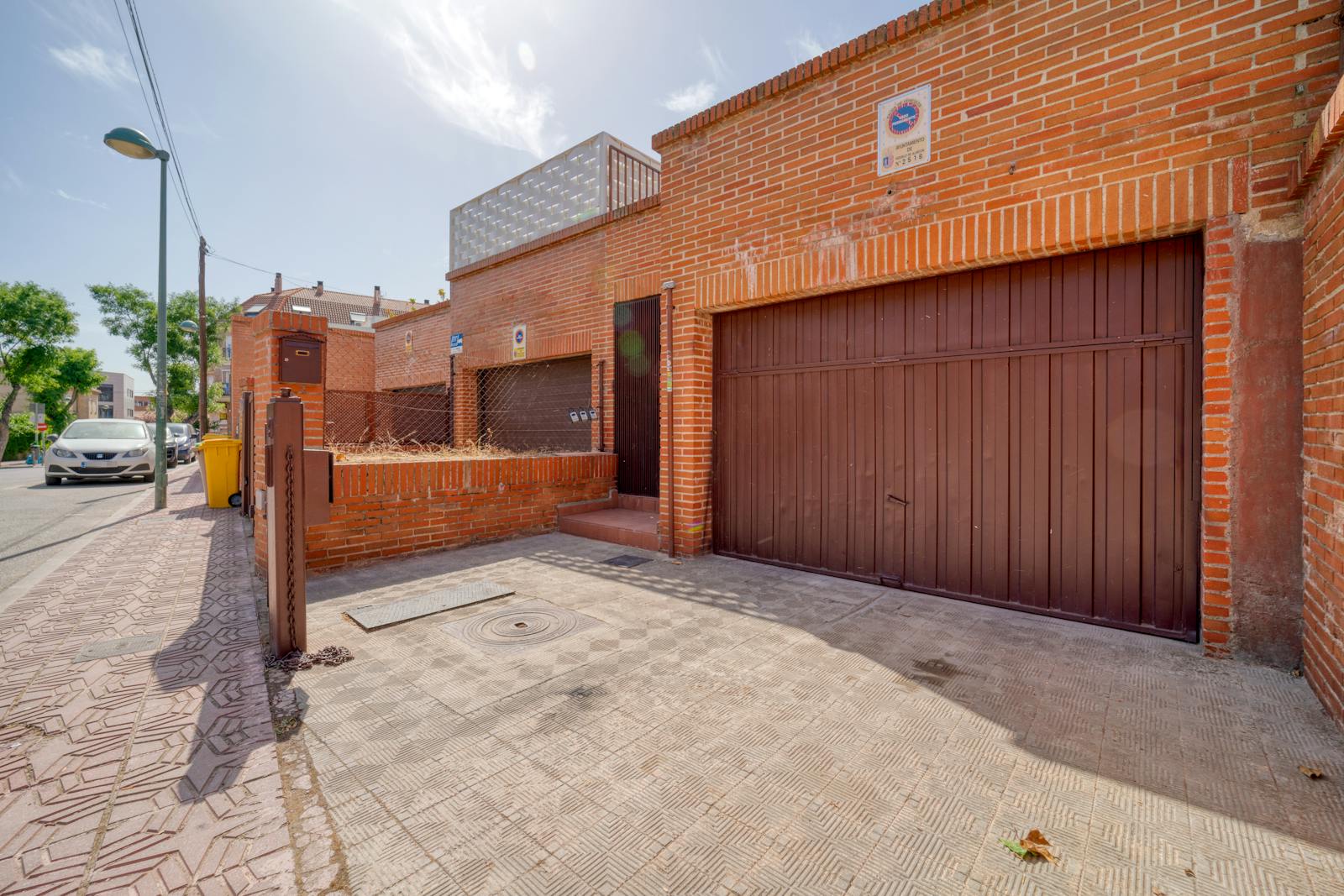
Why Are Philadelphia Rowhouse Openings So Narrow?
Original carriage and stable construction (pre-1920)
Most Philadelphia rowhouses with original rear garages were built between 1880 and 1920, when the structures served as carriage houses or stables. Carriage widths of the era were 5'6" to 6'8" — and the openings were sized accordingly. When automobiles replaced carriages, homeowners adapted the spaces but kept the original masonry openings to avoid expensive facade reconstruction.
Party-wall masonry constrains opening width
Philadelphia rowhouses share masonry party walls on both sides. The garage opening must fit within the rowhouse footprint between these walls — typically a 14' to 18' total width house, with the garage occupying only the central 7'–9' of that span. The remaining width is structural masonry that cannot be cut without compromising the entire rowhouse.
Header lintel constraints
Original brick rowhouses use brick-arch lintels or stone block headers above the garage opening. These lintels span the opening width using compression — wider openings require wider lintels and deeper bearing on the party walls. Modifying the lintel is a structural change requiring engineering and a Philadelphia L&I permit.
Alley setback requirements
Many Philadelphia rear-alley garages face a narrow alley (8' to 12' wide). City zoning requires the garage door swing or projection to remain inside the property line — which on tight alleys can force opening width reductions beyond what the masonry would otherwise constrain.
What Are My Retrofit Options for a Narrow Rowhouse Garage?
Option 1 — Custom-cut sectional door (most common)
Manufacturers including Clopay, Amarr, CHI, and Wayne Dalton produce sectional garage doors in custom widths from 6'0" to 18'0" in 2-inch increments. A Philadelphia rowhouse with a 7'2" opening receives a 7'2"-wide door manufactured to spec. Lead time is 3–4 weeks. Installation runs quoted in person in Philadelphia including removal of the old door and full opener install. See our Clopay vs Amarr comparison.
Option 2 — High-tension extension-spring single-piece door
For very narrow openings (under 7'0") or where headroom is below 10", a single-piece (one-panel tilt-up) door using extension springs is the most reliable choice. These doors are simpler, less prone to off-track problems in tight installations, and run quoted in person installed. Drawback: they require swing-clearance in front of the door equal to half the door height, which works only on rowhouses with sufficient alley depth.
Option 3 — European-style side-sliding or roll-up door
Some Philadelphia rowhouses with steep or curved alleys cannot accommodate a tilt-up door or a sectional. For these, side-sliding (Hormann SilverStar-style) or compact roll-up doors are imported from European manufacturers. Pricing is quoted in person Lead time runs 6–10 weeks. Service support is more limited but for the right home it solves a problem no domestic option can.
Option 4 — Manual barn-style doors (heritage installations)
For historic district installations where the Philadelphia Historical Commission requires period-appropriate appearance, custom wood barn-style doors with traditional hinge-and-strap hardware can be installed. Pricing quoted in person depending on wood species. Manual operation only — but homeowners can pair with automatic openers using carriage-house hardware kits.
What Does a Philadelphia Rowhouse Retrofit Visit Look Like?
Initial site survey (45 minutes, free)
The technician measures the existing opening with precision: width at three heights (top, middle, bottom — Philadelphia openings rarely measure exactly the same at all three points due to settling), height at three widths, headroom available, ceiling clearance, and door-swing clearance into the alley or driveway. Photos are documented for the manufacturer order.
Header and floor plumb check
Like Pittsburgh hillside garages, Philadelphia rowhouses often have settled foundations after 100+ years. Header tilt and floor slope are measured. If the floor slopes more than 1" across the door width, the bottom seal needs custom adjustment to maintain a weathertight close.
Material and finish selection
Steel (most common, quoted in person), composite (mid-range, quoted in person), or wood (heritage, quoted in person). Insulation options: non-insulated (suitable for unconditioned rowhouse garages), R-9 single-layer, or R-18 dual-layer for attached and conditioned spaces. See our PA garage door insulation R-value guide.
Manufacturing order and lead time
Custom orders take 3–4 weeks from manufacturer. We hold the deposit and schedule installation when the door arrives. Installation day requires 4–6 hours on-site for full retrofit including old-door removal, jamb prep, new track and hardware installation, door panel install, opener mounting, balancing, and a final 6-cycle test.
Old door disposal
Steel and wood door removal and metal recycling are included at no extra charge in Philadelphia. Hazardous coatings (lead paint on pre-1978 doors) are handled per EPA RRP rules.
What Does the Cost Breakdown Look Like?
Door panel cost by material
Custom-sized steel sectional doors run quoted in person for the door alone. Composite doors quoted in person Wood doors quoted in person These prices are panel-only — installation, hardware, opener, and removal are additional.
Hardware kit
New track, brackets, hinges, rollers, springs, and cables: quoted in person for standard rowhouse-width installations.
Opener (if including)
Standard chain-drive openers run quoted in person installed. Belt-drive (quieter, better for attached rowhouse living spaces) quoted in person Jackshaft side-mount openers (low-headroom solution) quoted in person See our belt vs chain drive comparison.
Old door removal and disposal
Included free with all OnPoint Pro Doors PA Philadelphia retrofits.
Total typical Philadelphia rowhouse retrofit
Most complete retrofits land between quoted in person (basic steel, no opener) and quoted in person (composite with belt-drive opener). Premium wood and historic-district installations run quoted in person all-in.
Which Philadelphia Neighborhoods See Narrow-Opening Retrofits?
South Philly (Passyunk, Bella Vista, Pennsport, Point Breeze)
The highest density of narrow rowhouse garage openings in the city. Typical openings 7'0" to 7'8". Mostly brick lintels, often original 1890s–1920s construction.
Fishtown, Northern Liberties, Kensington
Mix of carriage-house garages (some converted from rear stables) and converted commercial openings. Wider range of opening sizes; some as narrow as 6'8".
Center City and Old City
Historic district considerations apply throughout. Custom wood doors and heritage-appropriate hardware are common requirements. Lead times longer due to Historical Commission review.
Manayunk, Roxborough, East Falls
Hillside rowhouses with grade-level rear garages. Both narrow openings AND sloped floors are common — requires careful bottom-seal customization.
Chestnut Hill, Mt. Airy, Germantown
Mix of original stone-and-brick carriage houses and 1920s rowhouse construction. Heritage materials often preferred.
Fairmount, Brewerytown, Spring Garden
Mostly 1900s–1930s rowhouses. Standard steel custom-cut doors fit 90%+ of these openings.
What Are the Most Common Retrofit Mistakes?
Buying a stock-size door and forcing the fit
Some homeowners try to save money by buying a stock 8x7 door from a big-box store and trimming the brick opening with masonry work. The masonry alteration cost (quoted in person) and the structural risk to the rowhouse far exceed the savings on the door.
Skipping the headroom measurement
Standard sectional doors need 13" of headroom above the opening for the curved track. Rowhouses with finished basements directly under the garage or with low-clearance overhead joists may have only 6–9" of headroom — requiring a jackshaft opener and low-headroom track kit. Pre-survey catches this 100% of the time; failing to survey often produces an unworkable installation.
Choosing the wrong material for an unconditioned space
Composite and wood doors expand and contract with humidity. In an unconditioned Philadelphia rowhouse garage, this can cause panel binding within 18 months. Steel is the safer choice for unconditioned spaces.
Ignoring the slope of the alley or driveway
If your rowhouse opens onto a sloped alley, the door's bottom edge must seal against a sloped floor. Standard bottom seals leak. A custom-shaped bottom seal solves this — but only if specified at manufacturing time, not retrofitted after installation.
Forgetting the opener wire route
Most rowhouses don't have a ceiling outlet for the opener. Wiring needs to route from an existing outlet, which on a narrow rowhouse layout can require additional electrical work. Get this confirmed at the survey, not after the install team arrives.
Frequently Asked Questions
What is the typical Philadelphia rowhouse garage opening width?
Most pre-1940 Philadelphia rowhouses with attached garages have openings between 6'6" and 7'10" wide and 6'8" to 7'2" tall. The narrowest openings appear in 19th-century rear-alley rowhouse blocks across South Philly, Fishtown, and Queen Village. Newer construction (1970s+) typically has standard 8x7 or 9x7 openings — only older rowhouses face the narrow-retrofit challenge.
Can I install a standard 8-foot garage door in my rowhouse?
No — forcing a standard door into a narrower opening requires reducing the opening, which on a load-bearing brick rowhouse facade means partial lintel reconstruction at quoted in person The standard approach in Philadelphia is the opposite: a custom-cut sectional door sized to the existing brick opening preserves the structural masonry and avoids permits beyond standard HIC work.
How much does a Philadelphia rowhouse garage door retrofit cost?
At OnPoint Pro Doors PA, custom-sized sectional doors run quoted in person fully installed (door, hardware, opener, removal of old door), single-piece extension-spring doors run quoted in person and European-style side-sliding or roll-up systems run quoted in person The market range across Philadelphia is quoted in person depending on materials and customization.
Does Philadelphia require a permit for a rowhouse garage door replacement?
A like-for-like replacement that does not alter the size of the opening generally does not require a Philadelphia Department of Licenses & Inspections permit. However, any work that changes the structural opening, adds an opener to a previously manual door, or modifies a historic district facade does require permitting. See our PA garage door permit guide.
What if my Philadelphia rowhouse is in a historic district?
Center City, Society Hill, Old City, Queen Village, Spring Garden, and parts of Fairmount, Chestnut Hill, and Germantown contain historic districts subject to the Philadelphia Historical Commission. Door replacements in these districts may require submission to the Architectural Committee. We coordinate with homeowners on this process; typical approval adds 4–8 weeks to a project. PA historic district garage door guide.
Can the existing brick opening accommodate a modern opener?
Yes in most cases. Standard chain-drive and belt-drive openers need 13" of headroom above the opening. If your rowhouse has less headroom, jackshaft (side-mount) openers like the LiftMaster 8500W mount on the wall next to the door and require zero overhead clearance. Side-mount openers run quoted in person installed in Philadelphia.
Do you service all Philadelphia neighborhoods?
Yes — Center City, South Philly, Fishtown, Northern Liberties, Manayunk, Chestnut Hill, Mt. Airy, Germantown, West Philly, University City, Fairmount, Brewerytown, Point Breeze, Passyunk, Queen Village, Old City, Society Hill, Bella Vista, Pennsport, Port Richmond, Kensington, Roxborough, and all 5 counties of Greater Philadelphia. Same-day dispatch.
Pro Tip — Photograph before you call
A 30-second phone video of the symptom (or photos of damage, measurements, error codes) lets our PA dispatcher diagnose 60-70% of cases by phone — so the technician arrives with the right parts on the first visit. No second trips, no waiting for parts orders.
⚠️ Safety Warning
Do not attempt high-tension spring or cable work yourself. Pennsylvania garage door springs store 150-300 lbs of energy and have caused serious injuries to homeowners attempting DIY repairs. PA HIC-registered contractors carry the proper winding bars, training, and insurance.
Pro Tip — Annual tune-ups prevent 70% of emergencies
Our PA annual tune-up service (quoted in person statewide) catches the leading causes of emergency failures before they escalate. Spring tension, cable fraying, roller wear, hinge degradation, opener health, and safety sensor function are all inspected. PA annual maintenance guide.
Pro Tip — Ask about our 5-year workmanship warranty
Every OnPoint Pro Doors PA repair carries a 5-year workmanship warranty — vs the PA industry standard of 1-2 years. If the same component fails again within 5 years, return labor is free. Document this in your service agreement at the time of repair.
Step-by-Step PA Service Process
- Call (484) 312-5999 or reserve online. Describe your symptom, location, and any photos/video available.
- Phone diagnosis. Our PA dispatchers diagnose 60-70% of issues over the phone with your description and photos.
- Same-day appointment. Most PA calls received before 2 PM get a same-day technician visit. Emergency calls 24/7.
- On-site diagnostic (free). Technician arrives, confirms diagnosis, and provides a written estimate before any work.
- Repair on the first visit (typical). Our PA trucks carry the most common parts for top opener and door brands. 92%+ of PA repairs are completed on the first visit.
- Test and document. Full safety test, balance check, and a 5-year workmanship warranty in writing.
- Follow-up. A 7-day check-in to confirm the repair is performing as expected.
Do & Don't — Pennsylvania Cheat Sheet
✅ DO
- Schedule annual PA tune-ups in October before winter
- Address symptoms within 30 days of first appearance
- Photograph or video the issue before calling
- Use a HIC-registered Pennsylvania contractor
- Get written warranty terms (we offer 5-year)
- Call (484) 312-5999 for same-day PA dispatch
❌ DON'T
- Ignore early warning signs (bumps, noises, scrapes)
- DIY high-tension spring or cable work
- Hire an unregistered or uninsured PA contractor
- Accept "as-is" repairs without a written warranty
- Lubricate the tracks (lubricate rollers and hinges instead)
- Force a binding door through repeated cycles
Get Same-Day Pennsylvania Service
OnPoint Pro Doors PA handles rowhouse narrow garage opening retrofit every week across all 67 Pennsylvania counties — same-day dispatch to Philadelphia, Pittsburgh, Allentown, Reading, Lancaster, Erie, Scranton, Harrisburg, Bethlehem, Williamsport, York, Easton, and Altoona.
- No trip fee. No diagnostic charge. Free written estimate before any work.
- Same-day PA dispatch for calls received before 2 PM.
- 5-year workmanship warranty on every repair.
- HIC-registered Pennsylvania contractor. Stocked Trucks.
Call (484) 312-5999 right now or email service@onpointprodoors.com. For non-emergency scheduling, use our online reservation form.
Related guides: PA annual maintenance checklist • PA repair cost guide • PA garage door troubleshooting • All PA services