Sectional overhead doors, roll-up doors and rolling steel doors on shops, warehouses, storage rows and farm buildings. A door that leaves a building open goes to the front of the line, and every repair starts with a free estimate.
Tell us what the door is doing. Nothing begins until you've heard the number, and hearing it is free.
A garage door at home goes up in the morning and down at night. The door on a repair bay, a loading area or a busy storage row can be working from the first shift to the last, and every part of it wears to match: springs, cables, rollers, hinges and the motor that drives it.
That's why commercial repairs look different. Springs are often specified for many more cycles than a house spring, tracks and hardware are heavier, and the operators are built to run longer without overheating. Getting those details right is what keeps a repaired door from coming back on the schedule a few months later.
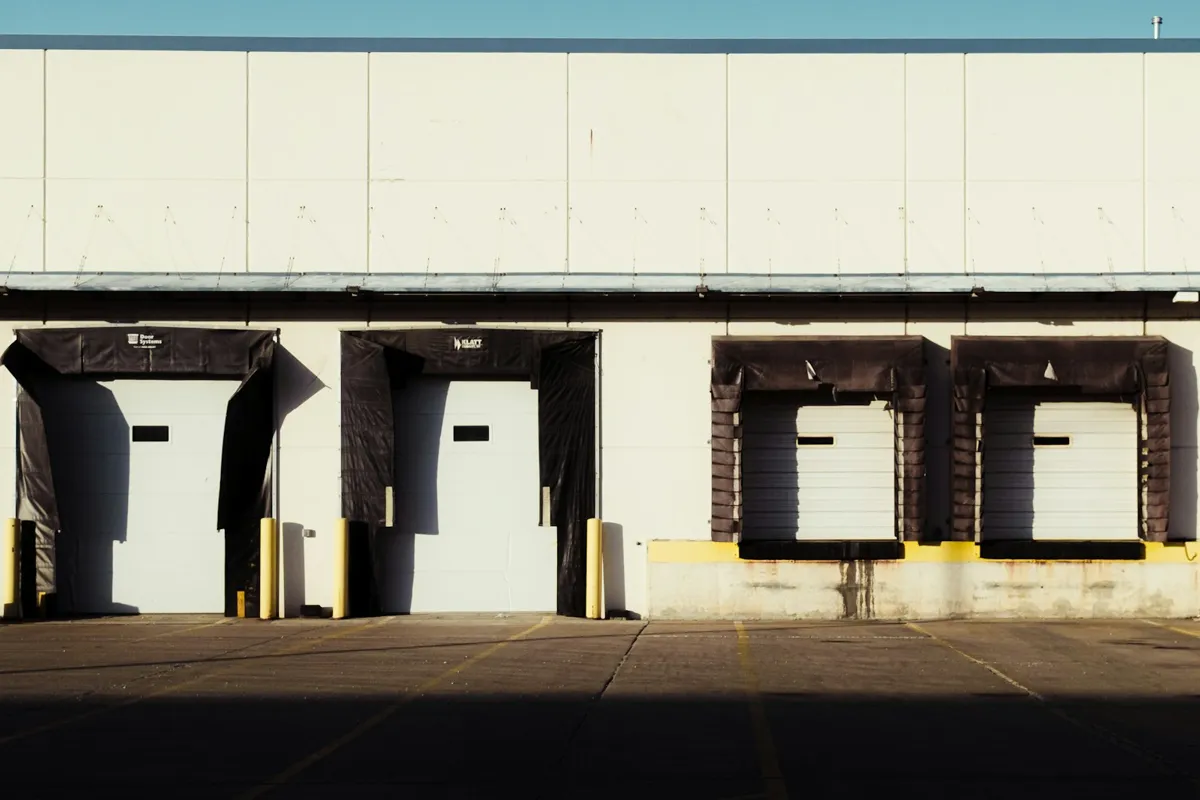
Sectional overhead doors are the panels-and-tracks doors you see on shops, bays and many warehouses, often insulated and often with a row of windows. Roll-up sheet doors, the corrugated kind on storage units and small shops, coil around a drum above the opening and run in side guides.
Rolling steel doors are the heavier cousin: interlocking slats that wind onto a barrel with springs inside, common on loading areas, service counters and buildings where headroom is short. Each type breaks in its own ways, and each gets repaired on its own terms rather than as if it were a big house door.
On a door that runs all day, a spring is usually the first thing to go, and once it breaks the door is too heavy for anyone to lift, by hand or by motor. Lift cables wear through low down, right where winter slush and road salt collect around the brackets, and humid summers add rust to everything made of plain steel.
Sections get hit. A truck backing in, a forklift mast left up, a trailer that drifts: a creased panel or a bent track stops a door as surely as a broken spring. Bent sections can often be replaced one at a time, and a track that has been knocked out of line is straightened or replaced so the door runs true again.
Then there are the safety parts: photo eyes, a sensing edge along the bottom, and the limit settings that tell an operator where to stop.
A door stuck open at closing time is a different kind of call. Stock, tools and equipment are sitting behind an opening that won't shut, and that goes ahead of routine work.
The first job on that visit is getting the opening closed and locked. Sometimes that means the full repair on the spot; sometimes it means securing the door and coming back with a part that has to be ordered. Either way you know which it is, and why, before the technician leaves.
Motors for business doors are built in a few layouts. Some ride a rail on the ceiling and tow the door open; some mount on the jamb next to the door and drive the torsion bar directly; rolling doors usually get a unit beside the barrel with a hand chain hanging from it, so the door can still be raised in a blackout.
Staff usually run them from a wall box with separate up, down and stop buttons, and many doors add a soft rubber edge on the bottom bar that sends the door back up the moment it touches something. When a motor hums without moving, quits partway or won't bring the door down, the fault is as often in the door, that edge or the stop settings as in the motor itself, and the technician checks all of them before recommending anything.
A door that's still raised by hand or by chain can usually be motorized, and that's often when worn springs get replaced too.
One building or a row of doors, the visit follows the same order.
Winter is hard on a door that opens onto a lot. Meltwater runs under the bottom seal in the afternoon and freezes overnight, and an operator that tries to lift a frozen door strains its motor or snaps a cable. Rollers packed with slush drag in the tracks, and a sensing edge filled with ice stops reading properly.
Summer brings the opposite trouble: damp air that rusts springs, cables and fasteners on doors in unheated buildings. A look at the springs and cables before the cold sets in, and new seals where the old ones have torn, prevents a good share of the January calls.
Around the county the work ranges from repair bays and small shops in town to warehouses along the main roads, self-storage rows with dozens of roll-up doors, and farm buildings with tall doors for tractors and equipment.
Farm and equipment doors bring their own problems: long cables on tall runs, heavier springs, and doors that sit through winter in unheated buildings. Storage rows tend to need the same few repairs on many doors at once, and the whole row gets worked through in a single trip.
Slatted rolling steel doors, corrugated roll-up doors on storage units and small shops, and panel doors that run in tracks, plus the motors, springs and guides that go with them.
Call and say the building is open. That jumps the line ahead of scheduled work, and the visit starts with getting the opening shut and locked for the night.
Yes. Tell us when the door has to be open for deliveries or customers, and the visit is planned around it where the schedule allows.
Rarely. Damaged panels can usually be swapped one at a time, and a track or guide knocked out of line is straightened or replaced, so most of the door stays in service.
Usually, yes. Most sectional and rolling doors can be motorized, and the springs are checked at the same time so the operator isn't lifting dead weight.
The type of door, roughly how big it is, whether a motor runs it, and what it does when someone tries to open it. A snapshot of the sticker on the motor helps the right parts ride along.
Yes. A row of storage doors or a building with several bays can be looked at together, with each door listed on its own line of the estimate.
Yes. The technician looks at the door, explains what it needs and gives you a free estimate before any work starts.
Say what's wrong and we'll commit to an arrival window you can plan around. The visit and the estimate is free, wherever you are.
Want to talk instead? Call (484) 312-5999.
Tell us what the door is doing. Nothing begins until you've heard the number, and hearing it is free.